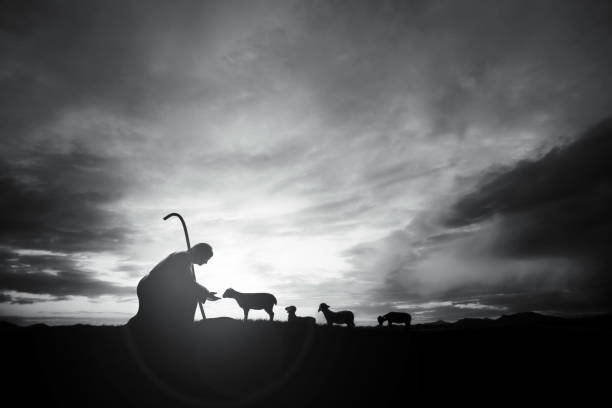
The Lord Is My Shepherd (Psalm 23)
Psalm 23 is one of the most beloved passages in Scripture—so familiar that even young children can recite it by heart. Its timeless appeal lies in how deeply it speaks to the core needs of humanity: provision, protection, peace, and guidance. David uses the image of a shepherd to describe his relationship with God—a fitting metaphor, since he himself tended his father’s sheep before becoming king of Israel.
“The LORD is my shepherd; I shall not want” (v. 1).
David does not say, “There is a shepherd,” but “my shepherd.” This is personal. It speaks of relationship, ownership, and trust. As a former shepherd, David understood the risks involved in caring for sheep. He once fought off a lion and a bear to rescue them. If David was willing to risk his life for his sheep, how much more will the Lord—our Good, Great, and Chief Shepherd (John 10:14; Hebrew 13:20; 1 Peter 5:4), care for those who belong to Him?
A shepherd’s role is to protect, provide, and guide. Sheep do not determine their own path; they simply follow. In following, they find everything they need. That is why David could confidently say, “I shall not want.” But this promise is rooted in surrender—you cannot experience “no lack” without first submitting to the Shepherd.
I remember struggling to learn how to swim and nearly giving up. My instructor told me, “Don’t fight the water—you can’t win. Submit to it, and it will carry you.” I realized my struggle came from resistance, not inability. In the same way, many of our struggles in the Christian life stem from our unwillingness to fully submit to God. When challenges arise, we panic, strive, and even fight battles that are not ours. Yet God reminds us, “The battle is not yours, but Mine.” Whatever you are facing—whether in your marriage, work, or personal life—place it in His hands. Surrendering brings help.
“He makes me lie down in green pastures; He leads me beside the still waters. He restores my soul” (vv. 2–3a).
The shepherd knows where true nourishment is found. God provides for every dimension of our being—spirit, soul, and body. While physical food sustains the body, the Word of God nourishes the soul and spirit.
Shepherds lead sheep beside still waters for a reason. Moving water can soak the sheep’s wool, weighing them down and causing them to drown. Still waters are safe waters. In the same way, God leads us in ways that protect us, even when we don’t fully understand. Through His Word, His Spirit, and often through the community He places us in, He keeps us from dangers we may not see.
David says, “He restores my soul.” God restores by bringing forgiveness, renewing peace, and realigning us with His purpose. When the soul is restored, joy returns.
“He leads me in the paths of righteousness for His name’s sake” (v. 3b).
A good shepherd knows the right paths to bring the sheep home safely. Likewise, God leads us in ways that are right and life-giving—even when we cannot see the full picture. He does this for His name’s sake—because His reputation is tied to His care for His people. He is committed to leading us well.
“Yea, though I walk through the valley of the shadow of death, I will fear no evil; for You are with me; Your rod and Your staff, they comfort me” (v. 4).
Notice David says, “though I walk,” not “if I walk.” Valleys are inevitable. But they are not permanent, they are pathways, not destinations.
Whether you face hardship, loss, fear, or uncertainty, you are not alone. God’s presence is your assurance. His rod protects, and His staff guides. Even in the darkest moments, His presence drives out fear.
“You prepare a table before me in the presence of my enemies; You anoint my head with oil; my cup runs over” (v. 5).
After the valley comes provision and honor. God prepares a table—not in the absence of enemies, but in their presence. His blessing is not dependent on your circumstances.
The shepherd anoints the sheep with oil to protect them from parasites and injury. In the same way, God’s anointing brings protection, healing, and freedom. And David declares, “my cup runs over.” God does not bless sparingly—He blesses abundantly, beyond what we can contain.
“Surely goodness and mercy shall follow me all the days of my life; and I will dwell in the house of the LORD forever” (v. 6).
David ends with confidence: “Surely.” Not maybe. Not sometimes. Certainly. God’s goodness provides, and His mercy forgives. These are not occasional gifts; they are constant companions for the believer.
The final promise is eternal: dwelling with the Lord forever. This is the ultimate security and hope of every believer— “My sheep hear My voice, and I know them, and they follow Me. And I give them eternal life, and they shall never perish; neither shall anyone snatch them out of My hand” (John 10:27–28).
If today you cannot say with confidence, “The Lord is my Shepherd,” you can begin that relationship now. Surrender your life to Him. He is ready to receive you, guide you, and care for you—both in this life and in the life to come.
—Philip O. Akinyẹmi